Showing posts with label choice. Show all posts

Saturday, 28 January 2012

Canned Dreams


Canned Dreams | Trailer from OktoberFi on Vimeo.

When shopping for food people often complain about the high prices. But have you ever wondered how a can of ravioli can cost 1 euro? If you look at the list of ingredients and the metal used for the can, how can all that be worth so little? This film shows the journey of the ravioli can, and it shows you the sacrifices made in order for you to be able to complain that 1 euro is too much. I saw the film today in the cinema where I work, and I realised it is the answer to the questions of all those people I know who wonder about my strange eating habits. Why do I choose organic? Why do I choose local? Why do I skip prepared and canned food? And why don't I eat meat? Watch this and you will know. I cried because of the cruelty of this world that we call civilisation. And I cried because those animals reproduce, because their sole purpose is to exist for us to walk over them. The Polish guy who murders cows for work, he who is describing how he wants to kill the man his wife fell in love with while he himself was sleeping with another woman; if he worked on a small biodynamic farm, planting beautiful flowers, I hardly think he would like to kill anyone. But there is no use blaming the workers, or even the corporate executives and owners. It is us who are to blame. Us, who buy these products which can hardly be called food. We make all this possible. A complete reconfiguration of values is needed. Next time you think real, organic, natural, healthy food is too expensive, think about whether you need those new jeans or that bigger tv. Or whether you would rather put your money into your well-being, health and happiness. Alarm bells should start to ring when a price is as low as that can of ravioli, it simply is not the right value for food.

Emma

Friday, 9 December 2011

The clothes we wear

For a long time now I have wanted to write something about clothing. Wearing clothes is so obvious to us that we hardly think about it. Well of course we think about how we look and whether we're warm or cool enough, but how often do we really give a thought to what our clothing actually is made of? Acrylic fiber, for example, is something so complicated that I didn't understand any of the descriptions offered by Wikipedia. Same thing with polyester. No wonder these textiles don't feel good on the skin when they're so unnatural. Especially in the winter, synthetic fibres become static and make your hair stand up straight, and they're not even warm. Natural fibres are much more pleasant on the skin, and much more practical too.


Cotton is probably the most common material used for clothing and other everyday products such as sheets, towels, tampons, nappies etc. And even though this is a natural plant it's not so simple, because the word 'natural' lost its meaning long ago. Cotton fields only take up 3% of the world's farmland, but they are sprayed with 25% of the world's pesticides and herbicides, including some of the most toxic ones. This might be 'allowed' because cotton is not directly consumed as a food, but our skin absorbs stuff just like any other organs do. Imagine that you're probably sleeping in sheets full of toxins, rubbing your skin against them every night. And it's not just our outer skin, imagine the amount of pesticides absorbed from tampons.. In fact, we even eat cotton, through cottonseeds and cottonseed oil which is used in some processed foods and as feed for cows, entering our bodies through non-organic meat and dairy. Pesticides are not the only danger however, but dyes can be extremely toxic too, containing cancer-producing chemicals. Have you ever noticed how new jeans colour off on your skin? That's not such a good thing because the skin is just the gateway to the bloodstream and the rest of your body, including the brain. As if this wasn't enough, the biggest threat to 'natural' cotton is perhaps genetic engineering. Most cotton-production is owned by a Monsanto monopoly that pushes GE cotton as a 'green alternative'. The truth is, these plants have been genetically modified in a way that they either emit their own pesticide, or are resistant to mega-doses of pesticides. The problem with this is that other plants too become resistant to pesticides, resulting in a never-ending need of new ever more toxic pesticides. This is a real threat to organic cotton, as the GMO cotton crops spread with the wind and can settle in organic fields. If Monsanto inspectors then find these GMOs in an organic field they can basically fine the farmer for growing Monsanto-owned crops illegally. The farmer is then faced with the option to either pay Monsanto huge sums of money or to start growing the GMO plants and basically being owned by Monsanto. The 'cotton suicides' happening in India are a result of this. Basically, whenever you buy cotton that is not 100% organic, you can be pretty sure you're supporting Monsanto. And even if the cotton is organic, the dyes probably aren't.. If you care about these things, it might prove quite a challenge to go shopping, but I have as a rule to always wash everything I buy before I start using it, especially if it's not organic. It's good to wash them separately from old clothes the first time, in order not to contaminate the rest of your clothes. And also, an extra rinse programme can be used at the end. And this process should probably be repeated..a few times. And it probably still doesn't remove all the toxins. Plus you're still supporting Monsanto (unless you buy organic).. My answer: buy second-hand.

More cotton information:

http://www.organicconsumers.org/clothes/index.cfm

http://www.naturalnews.com/031266_GM_cotton_agriculture.html

http://www.naturalnews.com/030913_Monsanto_suicides.html

http://www.eurekalert.org/pub_releases/2011-02/wuis-nfi020711.php

http://www.naturalnews.com/029904_organic_cotton.html


In addition to cotton, there are of course other fabrics that are also natural and much easier to find in a non GMO-version. In the summer I love to use linen and hemp because of their coolness. And wool is of course an obvious choice in the winter. And silk is an incredibly pleasant fabric, and it looks very elegant too.

Here's a blog about organic clothing.

If you want to know more about Monsanto:

http://en.wikipedia.org/wiki/Monsanto

http://www.naturalnews.com/033772_Monsanto_Roundup.html

http://bestmeal.info/monsanto/company-history.shtml

http://www.greenpeace.org/international/Global/international/planet-2/report/2008/3/7-deadly-sins.pdf

http://www.youtube.com/watch?v=_ENPyDuR23s

and a documentary film.


I hope you find what's important for you, and start manifesting it in your life.


Lots of love,

Emma

Thursday, 17 November 2011

Is change a personal threat?


When people notice that I eat differently from the norm they usually seem to take it as some kind of a personal threat. They are instantly ready to defend their bad eating habits by all costs and often get insulted if I criticise something they eat. Why is it that eating is so personal? By common sense one would think that if you are told that what you consume is bad for you, you wouldn't want to eat it anymore, or at least you'd want to find out more. Or do they think I just make it all up because I have nothing better to do? And people are very suspicious towards my food, even if I don't say anything about it or about their microwave crap. The brave ones ask me what I eat, and sometimes they get interested and want me to tell them more, while at times they again take the difference as a personal threat and start talking about how good their food is while at the same time condemning me as some strange new-age hippie. I don't really mind all this, people can eat what they want, but I'm just a bit confused by this phenomenon of seeing eating as such a personal thing. To be honest, I hardly ever even criticise what people eat, and yet they still react as if I do. So could it be that somewhere underneath these people know they could be eating in a much healthier way? But if that's so, then why not change? Is it really that scary?

Emma

Monday, 31 October 2011

Samuli Perälä on nutrition

This food guru firstly highlighted 2 perhaps obvious attributes concerning food: the best food is original and natural. Food that is neither can be classed as fake and includes synthetic, human-made substances and overtly processed products such as white sugar, table salt, flours, and dairy products (including supermarket milk). The processing of foods destroys vital nutrients and such 'foods' are then stuffed with other substances instead, which burdens the body, often leading to liver and kidney symptoms. Ridding your body of such toxins and changing your eating habits to a healthier direction is actually very easy:

Mineralisation

Our bodies are largely composed of minerals and therefore the mineral balance in our bodies is of extreme importance. The easiest way of obtaining most vital minerals is by eating high quality salt. This can be either mountain salt (often called Himalayan rose salt or the like) or sea salt (this is gray in colour and crude, and has not been 'cleaned' with harmful synthetic substances). In contrast, 'normal' table salt is bad for us and should by all costs be avoided as it is highly processed, and sodium is often added in excess, making our bodies very confused. Minerals keep our bodies free from impurities, and as such pure salt is not harmful to us, we can gladly eat plenty.

Vitamination


Many of the vitamins and nutrients vital for our well-being are found in fresh and living food. The smallest and most sensitive nutrients are destroyed by heat, and food containing them should thus be eaten raw. Such foods are berries, all the greens that are fresh from nature, local vegetables, and sour fruits. In the northern hemisphere raw food often feels too cold and insufficient, but even so it is important that some uncooked food is added to each meal. This can be a salad composed of different greens.

Fats


Fats do not make us fat, that is a myth and a lie. This concerns cold-pressed, organic, natural and aboriginal fats, not the processed transfats that are continuously sold to us as healthy, although they actually are deadly. We need both 'hard' and 'soft' fats, which balance each other. Hard fats are for example butter and coconut oil (which is antibacterial and an excellent purifier), while soft fats include cold-pressed vegetable oils. Soft fats are especially important for women's hormones and they should be eaten by women in daily abundance. The balance between Omega 3, 6, and 9 is important, which highlights the importance of eating different kinds of oils and fats. These might for example include fish or fish oils, flax seed oil, avocado oil, hemp seed oil, coconut oil, and olive oil. Brassica oils (includes rapeseed oil and are very common in Finland as cooking oils = rypsi) are not recommended as the plant is of a highly refined species and as such not very aboriginal. This can be replaced with sunflower seed oil. Good fats can be eaten with a good conscience because we need much more of them than the current western diet suggests.

Purification


Green is the colour of pure, and as such all deep greens purify our bodies. Perhaps the most efficient food for this purpose are green powders, which can be anything from wheat grass to spirulina. Also, fresh greens are very good and recommended, for example nettle and other leaves. These should be chewed well to increase their force (all food should be chewed well and eaten slowly to lessen the burden on our stomachs). However, all purifying plants are extremely effective, and should be eaten in small amounts, especially in the beginning. Otherwise a risk of intoxication becomes relevant.

Superfoods


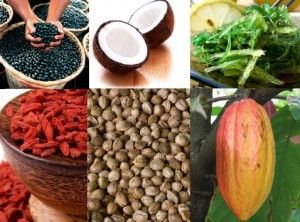
Superfoods contain ancient wisdom and act as acute aids to quickly provide us with missing nutrients and purify our intoxicated bodies. But in a natural state, when we are pure and gain all our necessary nutrition from pure, natural, organic, high quality foods (which is currently hardly the case) superfoods are generally not needed.


Other points made by Samuli:

- The best food for each person is usually the food that grows closest to our place of birth. This highlights the value of local food, which should definitely be taken into consideration when shopping for food.

- Herbs have subtle effects which we often do not notice because our bodies have been numbed by bad food and alcohol. But even if they go unnoticed, the effects do take place in our bodies.

- If you are tired, do not look for stimulants, what you need is sleep. When you wake up you can begin changing your diet to a more energy efficient kind.

- Concerning carbohydrates: again, high quality is what matters. Wild rice, quinoa, amaranth, etc are good sources.

- The most important nutrient addition to eat is vitamin D, especially in a country like this where we don't see the sun during half the year. This vitamin cannot be taken in excess and can freely be eaten in abundance.

- Fanaticism and absolutism is usually not good, they only increase stress, which is the worst state in which to eat.

- New things should be introduced slowly and moderation is the key.

- By far the best way to know what to eat is learning to listen to yourself. You know what you need, and you feel what is right.


If you have any questions or would like a personal consultation with Samuli, do contact me. I'll be back soon with more superinformation.

Love to all,

Emma

Saturday, 1 October 2011

In the light of the previous post..

..I want to share this video with you. It's a talk given by Tim 'Mac' Macartney, who is the founder of Embercombe.


Emma

Tuesday, 30 August 2011

Open your eyes


This is something that pretty much summarizes the madness of 'civilization'.

I tried to find the complete documentary online, but it seems only to be available in Finnish (and only for 24 days more), access it here.

Emma

Sunday, 7 August 2011

About thinking

On Friday we went to my brother's place for dinner, together with a few of his friends. We had a good time and ended up discussing food until it was almost midnight. How is it possible that organic food is labeled as something a bit strange that one should be wary of? How can so many people be so truly fooled to actually regard organic, pure and high-quality food as something potentially harmful? It seems people are not thinking at all with their own brains. Shouldn't any sane person understand that plants that grow naturally in the same way they have been growing for their whole existence are better than those that have been manipulated and treated with chemically made substances? Excuse me but wtf can be harmful about natural? Why is the word 'natural' scorned upon? The only explanation is total manipulation and brainwashing of the human mind. Start thinking people. Everyone knows that the only purpose of business is to make money. There is not and never will be anything 'moral' about business, it is only there to financially benefit the ones who own it. Then, add this to the fact that food, medicine, healthcare, etc is business. Do you think medicines are made to make you better? What would happen if medicines cured people? The whole medicine industry would crash because people wouldn't need more medicine. And what would happen if supermarkets sold healthy food? People would be healthy and in no need of medicines. Understand that what is now main-stream is not meant to be good for you. Most things that are advertised are not meant to be good for you. People tend to have the naïve understanding that shops would not sell things that were bad for them. Newspapers would not tell things that were bad for them. Doctors would not prescribe things that were bad for them. And it's not the shopkeepers, journalists or doctors who are bad. They are just owned and controlled by larger parties, often without knowing it. They would not want to harm you, they're just dutifully doing their job. But it's the business behind everything that is harmful. That's what's controlling everything. When we understand that we have come a long way. When we understand that we have a brain of our own that we can trust. The beautiful thing about all this is that we all have a choice. We can choose what to eat and what to read. We can turn off the television if we want to, or we can stop reading the newspaper. Or continue watching and reading but stop believing what they say. We can make our own decisions and conclusions about our own lives and about what is good for us. We can study what we want, the information is out there. The point is, we can choose to be happy and healthy people, superpeople.

My breakfast this morning (I didn't have a photo when I posted about breakfast)
Emma

Thursday, 4 August 2011

Bad vs good vs bad


I wanted to talk about something I have some trouble with whenever I go to the store. Seeing as we live in Finland, it's not all that easy to get local, organic fruits and veggies all year round. In the summer it's easier as our forests are filled to the max with lingonberries and blueberries etc. A few days ago, I had an enormous craving for apples, now easy enough you go to the store and buy some. But then you have the choice between local non-organic ones, or organic ones from south america. My first instinct would be to go for the organic ones anyway, as I don't want to pump my body full of toxins, but once you think a bit more about it, it's not actually that simple. At first one would think that it is obviously better for our dear Mother Earth to get the local ones, as they haven't been flown halfway across the planet to reach my local store. But what about all the toxins sprayed around these poor local apples? That can't be good. Neither for me nor for the Earth. So then you think that the organic ones are better. But they come from, let's say, Peru and are flown thousands of kilometers so that I can buy them (plus most of the time they're wrapped in plastic, a logic I simply do not understand) which is an enormous strain on the Earth. Then I start thinking about the nutritional facts. It's quite obvious that the organic ones should have loads more nutrients than the toxic ones, but how much of it do they lose in the week or so they travel to get to my corner store?

This is something I still have not been able to solve, I simply don't know which alternative's pros weigh out the other one's cons.

I have another issue with soy milk, but let's not get into that right now.

(yay my first post!)

Anna